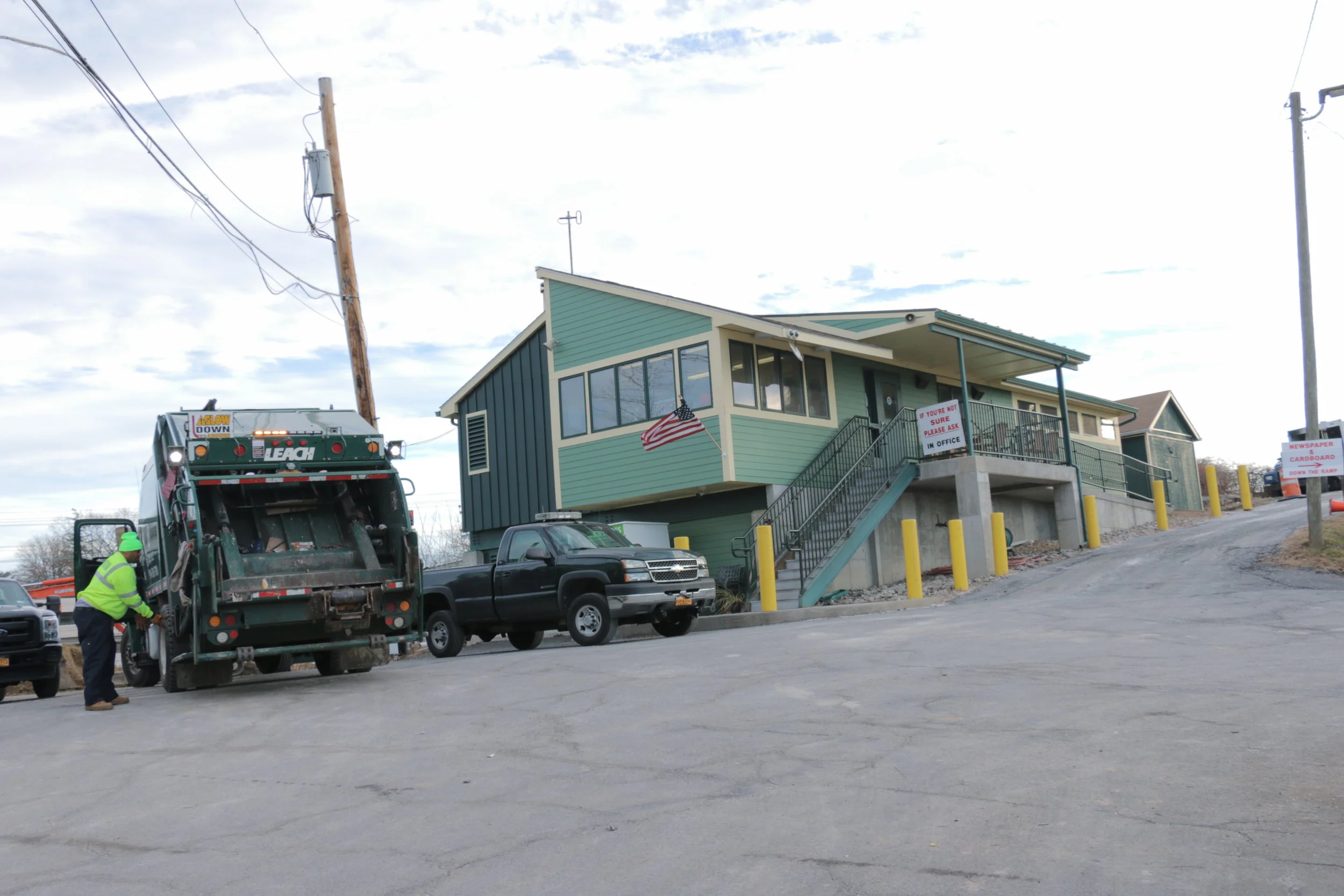
Maxwell Avenue Recycling Facility
Proof of residency is required.
Dumping Limitations
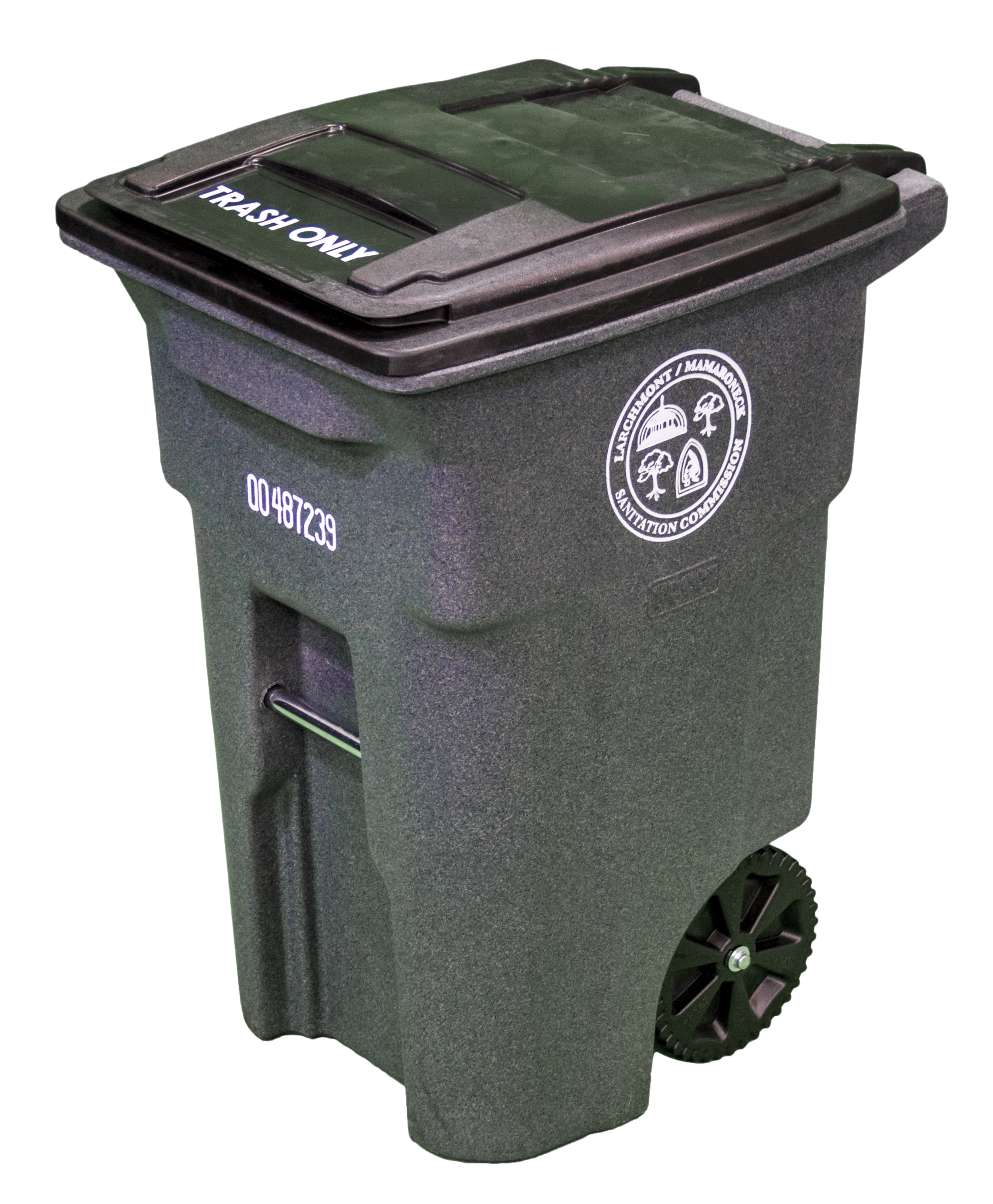
TOM & VOL residents may bring up to six (6) trash bags or (4) four 64-gallon barrels of household waste/rubbish to the facility.
Due to capacity limitations, truckloads of materials will not be accepted.
The Commission reserves the right to further limit the amount of material to be accepted at Maxwell Avenue at any time.
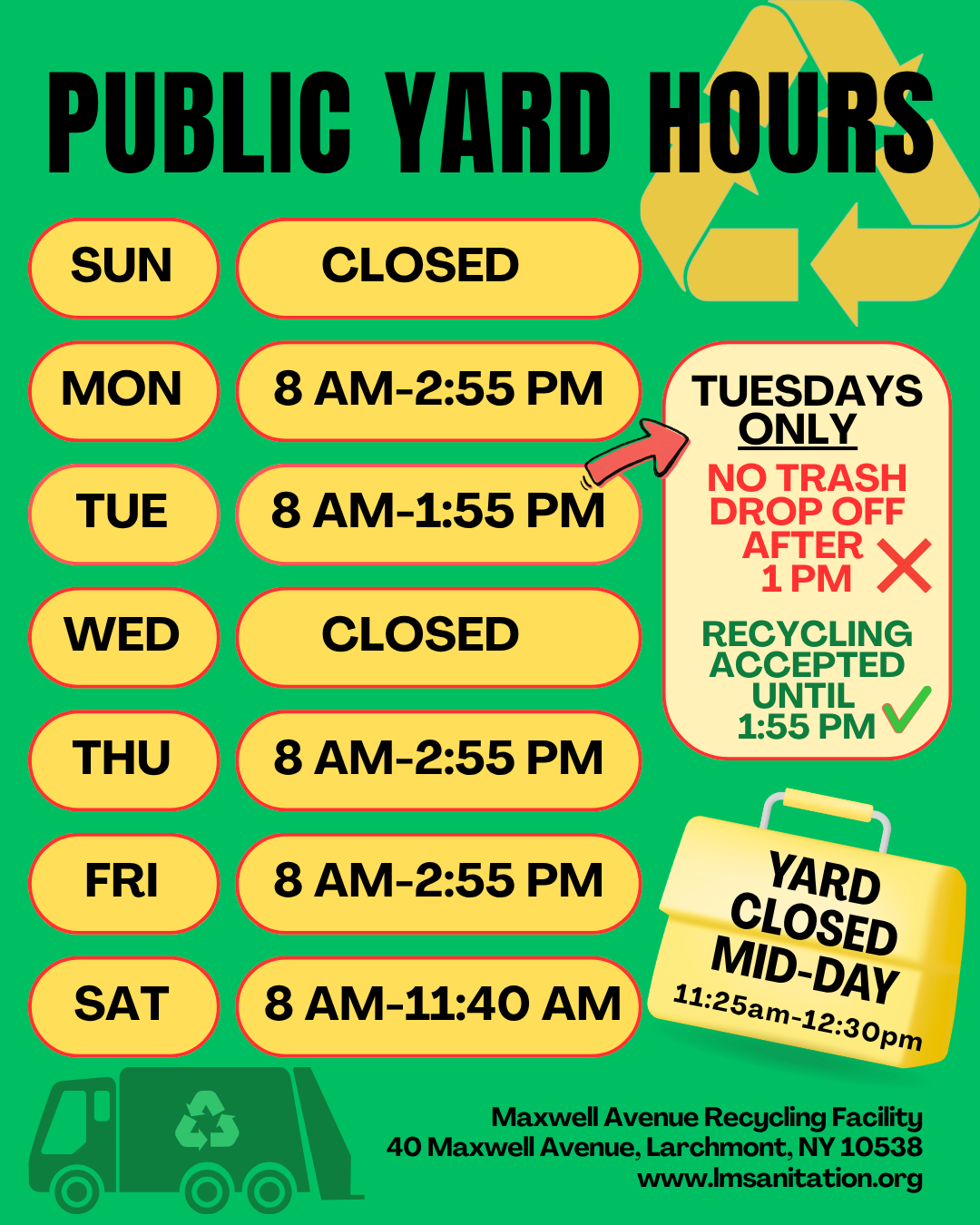
No drop offs of garbage, recyclables, or food scraps will be accepted outside of public operating hours.
SCHEDULE CHANGES/closures
Occasionally, there may be circumstances which may warrant closure of the facility. As much advance notice will be given to residents as possible.
We encourage all residents to sign up for Sanitation Alerts for these notifications. To sign up for Sanitation Alerts, click here.
Items for Purchase
Garbage & Recycling receptacles and food waste kits are available for purchase. Only cash or a check will be accepted. Click here to review current offerings.


Drop off Recyclables


Electronic Waste
Residents of the Town of Mamaroneck and Village of Larchmont must bring all electronic waste directly to the Maxwell Avenue Facility or to the Westchester County H-MRF in Valhalla.
Do not put out electronic waste with your rubbish, recycling, or garbage for curbside pickup. Alkaloid and Carbon-Zinc batteries can be safely discarded in the trash.
What is considered E-Waste?
Computers and laptops
Televisions
VCRs, DVD Players, and DVRs
Gamily Consoles
Copiers and printers
Stereos and Radios
Cellphones
iPods, CD Players, and other digital media players
Personal Privacy Protection
Improperly disposing of electronics can put your personal information and private electronic data at risk – increasing the risk of identity theft and other harmful consequences. To protect your privacy, make sure you thoroughly wipe your hard drive before donating or disposing of your electronics. Simply deleting files is not enough; traces of your personal data remain unless you download dedicated software or bring your electronics to a licensed retailer.
Food Waste
Residents can bring food waste to the Facility during regularly scheduled hours.
Here's How To Do It:
COLLECT your food waste in a countertop pail. Although not required, you may line your pail with a compostable bag - please no plastic or biodegradable bags. Compostable bags are available for purchase (roll of 25 bags for $3.00/roll). Most residents will fill the countertop pail with food waste 3-4 times per week.
TRANSFER that food waste into the larger bin for weekly storage. This larger bin can also be used to transport the food waste to the Maxwell Avenue Recycling Center. Anything that holds around 5-6 gallons and has a lid will work. It is recommended that food storage bins be kept indoors - either in the house or in the garage.
BRING your transportation bin to the Food Waste Recycling drop-off bins at the Maxwell Avenue Recycling Center to dispose of your food waste as often as needed.


Requires Private Disposal
Curbside Collection is Not available for these items:
Construction Debris - Contractors must remove and dispose of all construction debris. If you're doing the work yourself, then you must hire a private carter to take the debris away.
Loose Dirt or Dirt mixed with debris.
Tires - Bring back to the dealership.
Large ceramics - toilets and sinks, flower pots, and ceramic tiles.
Non-burnable materials - building and construction materials, wood or metal frame windows, screens, tree stumps, dirt, and rocks or stones.
Extra large items - pianos, armoires, pool tables, bath tubs, etc...
Compact Fluorescent Light Bulbs - CFLs are accepted at Home Depot and True Value.
Acid, chemicals, pesticides, solvents, etc - Accepted at Westchester County Disposal Facility - H-MRF. Call 914-813-5425.
Long fluorescent bulbs - Accepted at Westchester County Disposal Facility - H-MRF. Call 914-813-5425.
For a list of Westchester County’s Licensed Private Transfer Stations and Processing Facilities click here.
For a list of Westchester County’s Licensed Private Transfer Stations and Processing Facilities click here.
Westchester County Disposal Facility - H-MRF
Westchester County has opened a permanent Household Material Recovery Facility (H-MRF) on the Grasslands Campus in Valhalla. The H-MRF accepts household chemicals, electronics, Freon containing appliances, scrap tires, BBQ tanks, and confidential documents for shredding. The H-MRF is open 3 days a week, including Saturdays. Residents must schedule an appointment to drop off waste at the site. Residents can get more information about the H-MRF, including how to schedule an appointment, at http://environment.westchestergov.com/new-h-mrf or by calling the County's 24/7 Recycling HelpLine at (914) 813-5425.
For a complete list of items accepted at the H-MRF, please refer to their website. Following are some examples of common household items accepted at H-MRF:
Car tires (with or without rims) up to four per household
Confidential personal documents (shredding), up to four file boxes (10" x 12" x 15") OR six brown paper bags of personal documents only will be accepted per appointment.
Electronic waste
Expired or unused pharmaceuticals, medical needles and syringes
Fire Extinguishers
Fluorescent light bulbs including CFLs and tube-shaped fluorescent bulbs
LEDs
Kerosene and other flammable liquids
Mercury thermometers, thermostats
Pesticides, insecticides, herbicides
Photo and swimming pool chemicals
Propane Tanks
Rechargeable batteries
Refrigerant containing household items (e.g. air conditioners, refrigerators, and dehumidifiers)
Textiles (e.g. footwear, clothing, sheets, towels, linens and more)